Concrete stairs are one of the most durable and reliable stair solutions used in residential, commercial, and industrial properties. Whether they are installed for a front entrance, outdoor patio, basement access, or commercial building, concrete stairways provide long-lasting performance while offering flexibility in design and finishing options.
Unlike many other stair materials, concrete can withstand heavy use, changing weather conditions, and daily wear without requiring frequent repairs. Its strength and versatility make it a preferred choice for property owners looking for a combination of safety, functionality, and aesthetic appeal.
In this guide, we will explore everything you need to know about concrete stairs installation, including different design options, installation steps, safety considerations, and a detailed cost breakdown.
Concrete stairs are stair structures made using reinforced concrete, a mixture of cement, sand, gravel, and water combined with steel reinforcement for additional strength.
These stairs are typically formed by creating molds or frameworks, placing reinforcement materials, pouring concrete, and allowing it to cure properly. Once completed, concrete stairs create a strong and permanent structure capable of supporting significant weight.
Concrete stairways can be installed both indoors and outdoors. They are commonly used in:
Because concrete can be shaped and finished in various ways, homeowners and designers can customize stairs to match different architectural styles.
Concrete stairs offer several advantages compared to other stair materials.
One of the biggest benefits of concrete stairs is their exceptional durability. Properly installed concrete can last for decades while maintaining structural strength.
Concrete is resistant to:
This makes it an ideal option for outdoor applications where stairs are exposed to harsh environmental conditions.
Many people assume concrete stairs have a plain appearance, but modern concrete designs offer numerous customization options.
Concrete can be finished with:
This allows property owners to create stairways that complement their building design and landscaping.
Compared to materials such as wood, concrete requires relatively little maintenance. Routine cleaning, sealing, and occasional repairs are usually enough to keep concrete stairs in good condition for many years.
Choosing the right design depends on the available space, property style, safety requirements, and personal preferences. Modern concrete stairs can be customized in several ways.
Straight concrete stairs are one of the most common and practical designs. They feature a simple linear layout where all steps follow a single direction. This design is often used for:
Straight stairs are easy to construct, comfortable to use, and generally more affordable compared to complex designs.
L-shaped stairs include a landing area where the staircase changes direction at a 90-degree angle. This design is useful when space is limited or when a more visually appealing layout is desired.
Benefits include:
L-shaped stairs are commonly found in residential properties and multi-level buildings.
U-shaped concrete stairs consist of two stair sections connected by a landing that creates a U-shaped layout. This design works well for properties requiring efficient use of vertical space while maintaining comfort and safety. U-shaped stairs are often used in larger homes, offices, and commercial buildings.
Curved concrete stairs provide a more elegant and unique appearance. They are often used in luxury homes, commercial spaces, and architectural projects where aesthetics are a priority. Although visually appealing, curved stairs require more complex planning and construction, which may increase installation costs.
Floating concrete stairs creates a modern, minimalist appearance by making steps appear suspended. These designs require careful engineering to ensure structural stability and safety. Floating stairs are popular in contemporary homes and high-end architectural designs.
Decorative concrete stairs allow property owners to customize the appearance of their stairway.
Options may include:
These designs combine durability with enhanced visual appeal.
Proper planning is essential before beginning a concrete stair installation project. Several factors influence the design, cost, and performance of the final structure.
The intended use and location of the stairs play an important role in determining the best design. Outdoor stairs may require additional protection against weather conditions, while indoor stairs may focus more on aesthetics and space efficiency. Understanding how the stairs will be used helps determine the appropriate materials, dimensions, and finishing options.
The available area affects the type of staircase that can be installed. Straight stairs require more horizontal space, while L-shaped or U-shaped designs may work better in smaller areas. Accurate measurements are necessary to ensure comfortable step dimensions and proper installation.
Concrete stairs must meet local building standards related to:
Following these regulations ensures the stairs are safe and suitable for everyday use.
Using high-quality concrete mixtures and reinforcement materials is essential for long-lasting results. Low-quality materials or improper mixing can lead to cracks, surface damage, and structural issues over time.
Concrete stairs should complement the overall appearance of the property. Factors such as color, texture, finish, and railing style can significantly impact the final look of the staircase.
Installing concrete stairs requires careful preparation and professional execution to ensure the structure is safe, durable, and long-lasting. While the exact process may vary depending on the design and location, most concrete stair installation projects follow several key steps.
The first stage of concrete stair installation involves detailed planning and accurate measurements.
Professionals evaluate the available space, determine the required number of steps, calculate the proper rise and run of each step, and create a suitable design based on safety standards.
During this stage, factors such as drainage, surrounding structures, property layout, and intended use are considered. Proper planning helps prevent problems such as uneven steps, poor accessibility, or structural issues later.
A strong foundation is essential for durable concrete stairs. The installation area is cleared, leveled, and prepared to create a stable base. Depending on the location and design, excavation may be required to create enough space for the staircase foundation.
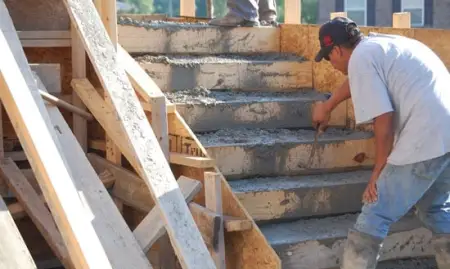
After preparation, contractors build formwork, which acts as a mold that shapes the concrete during installation. The formwork must be properly aligned and secured to ensure the final staircase has accurate dimensions.
Concrete is naturally strong under compression but requires reinforcement to improve its ability to handle tension and movement. Steel reinforcement bars, commonly known as rebar, are placed inside the structure before concrete is poured.
These materials help strengthen the stairs and reduce the risk of cracking caused by weight, temperature changes, or ground movement. Proper reinforcement placement is an important step in creating a long-lasting concrete staircase.
Once the foundation, formwork, and reinforcement are ready, concrete is poured into the prepared structure.The concrete mixture must be evenly distributed and properly compacted to eliminate air pockets and ensure strength.
After pouring, the surface is finished according to the desired appearance. Finishing options may include smooth surfaces, textured finishes, stamped designs, or decorative coatings. A professional finish improves both the appearance and safety of the stairs.
Concrete requires sufficient time to cure and achieve maximum strength. During the curing process, the concrete is protected from extreme conditions that may affect its performance. Proper curing helps prevent cracks and improves durability. After curing, the stairs are inspected to ensure they meet safety requirements and are ready for regular use.
Safety should always be a priority when designing and installing concrete stairs. Poorly designed or maintained stairs can create serious risks for users.
A properly constructed staircase should provide comfortable movement, stability, and protection against accidents.
The dimensions of each step directly affect comfort and safety.
Steps that are too high, too narrow, or uneven can increase the risk of trips and falls. Professional installers follow recommended measurements for:
Maintaining consistent dimensions ensures users can move safely and comfortably.
Handrails provide additional support, especially outdoor stairs, steep staircases, or areas with frequent foot traffic. Depending on the height and design of the staircase, guardrails may also be required to prevent falls. Choosing durable railing materials that complement the concrete design improves both safety and appearance.
Concrete can become slippery when exposed to water, ice, or other conditions. Adding slip-resistant finishes helps improve traction and reduces accident risks.
Popular options include:
These features are especially important for outdoor concrete stairs.
Proper lighting improves visibility and enhances safety, particularly for outdoor stairs used at night. Installing step lighting, pathway lights, or nearby fixtures helps users identify each step clearly and reduces the chance of accidents.
Although concrete stairs are highly durable, regular inspections help identify issues before they become major problems.
Property owners should check for:
Early repairs can extend the lifespan of the staircase and maintain safety.
The cost of installing concrete stairs varies depending on several factors, including design complexity, materials, location, labor requirements, and customization options. Understanding these factors can help property owners plan their budget more effectively.
Several elements influence the total project cost.
Larger staircases with more steps require additional materials, labor, and preparation, increasing the overall cost.
A small residential entrance staircase will generally cost less than a large commercial staircase.
Simple straight stairs are usually more affordable than customized designs such as curved, floating, or decorative concrete stairs.
Complex designs require additional planning, specialized skills, and more detailed construction work.
The condition of the installation area can impact costs.
Projects requiring excavation, foundation work, demolition, or drainage improvements may require additional labor and materials.
Basic concrete finishes are generally more affordable, while decorative options may increase the overall investment. Custom finishes such as stamped patterns, colored concrete, or premium coatings add aesthetic value but may require additional expenses.
Concrete stair installation requires several materials, including:
The quality and quantity of materials directly affect the durability and final cost of the project.
One of the advantages of concrete stairs is their long lifespan and low maintenance requirements. With proper installation and occasional maintenance, concrete stairs can remain functional and attractive for many years. Investing in quality materials and professional installation can reduce future repair expenses and increase property value.
Choosing the right stair material depends on factors such as durability, appearance, maintenance needs, and budget.
Wood stairs provide a warm and traditional appearance but require more maintenance compared to concrete. Wood can be affected by moisture, insects, and weather exposure, especially outdoors. Concrete stairs offer greater durability and require less maintenance, making them a better option for outdoor applications.
Metal stairs are often used in industrial and modern designs. While metal provides strength, it may require protection against rust and corrosion. Concrete offers excellent durability and better resistance to weather conditions.
Natural stone stairs provide a premium appearance but can be more expensive and challenging to install. Concrete can replicate the appearance of stone through decorative finishes while offering greater design flexibility.
Although concrete stairs are low maintenance, regular care helps preserve their appearance and performance.
Removing dirt, leaves, and debris prevents surface buildup and keeps stairs looking clean. Simple cleaning with water and mild cleaning products is usually sufficient.
Small cracks should be addressed quickly to prevent them from expanding. Early repairs help maintain structural integrity and prevent moisture from entering the concrete.
Sealing concrete surfaces helps protect against moisture, stains, and weather damage. Outdoor stairs especially benefit from periodic sealing.
In areas with freezing temperatures, moisture can enter cracks and expand during freeze-thaw cycles. Proper drainage and sealing help reduce weather-related damage.
Avoiding common installation mistakes helps ensure a safe and long-lasting staircase.
Improper step dimensions can create uncomfortable and unsafe stairs. Accurate measurements are essential for user safety.
Water accumulation can damage concrete over time. Proper drainage should be considered during the design stage.
Poor-quality concrete or reinforcement materials can reduce durability and increase repair needs.
Failing to follow building codes can create safety risks and compliance issues.
Concrete stair installation requires technical knowledge and experience. Attempting complex installations without proper skills can result in structural problems and additional costs.
Concrete stairs are a durable, versatile, and practical choice for residential and commercial properties. With a wide range of design options, strong structural performance, and low maintenance requirements, concrete stairways provide long-term value for property owners.
However, successful installation depends on proper planning, quality materials, accurate construction, and attention to safety requirements. Contact us today to discuss your design requirements, get expert guidance, and create a durable staircase solution that enhances your property’s safety and appearance.
The cost of concrete stairs installation depends on factors such as size, design complexity, materials, site preparation, and labor requirements. Custom designs and decorative finishes may increase the overall cost.
Properly installed and maintained concrete stairs can last several decades. Regular cleaning, sealing, and timely repairs help extend their lifespan.
Yes, concrete stairs can provide excellent safety when properly designed and installed. Features such as consistent step dimensions, handrails, and slip-resistant surfaces improve safety.
Yes. Concrete stairs can be customized with various finishes, colors, textures, and patterns to match different architectural styles and property designs.
The installation timeline depends on the size and complexity of the project. Simple staircases may take a few days, while larger or customized designs may require additional time for preparation and curing.